Exposome Architecture ofHuman Disease and Mortality
Profiling 720 external exposome factors and 4,059 biological markers in 409,206 European-ancestry UK Biobank participants — screened against 1,055 incident diseases and mortality, then validated across non-European UK Biobank participants and an independent U.S. population (NHANES).
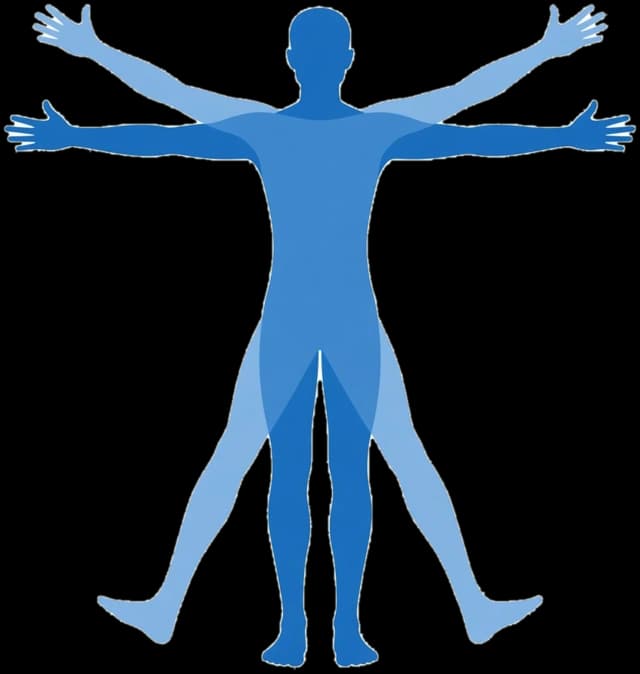
- Lifestyle factorsn = 528
- Health historyn = 85
- Natural & occupational environmentn = 72
- Socioeconomic factorsn = 35
- Proteomen = 2,919
- Physical measuresn = 419
- MRI phenotypesn = 413
- Metabolomen = 246
- Clinical biomarkersn = 62

European-ancestry participants
External exposome factors and biological markers measured at UK Biobank baseline and follow-ups.
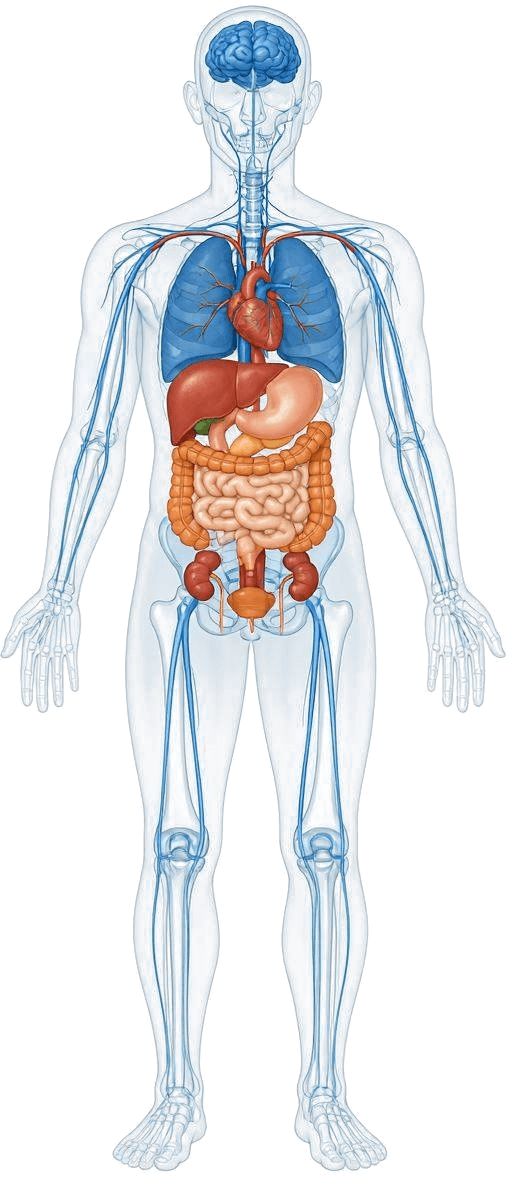
- Infectious
- Neoplasms
- Blood & immune
- Endocrine & metabolic
- Mental
- Neurological
- Ophthalmic & otic
- Circulatory
- Respiratory
- Digestive
- Dermatological
- Musculoskeletal
- Genitourinary & renal
Internal validationNon-European ancestry
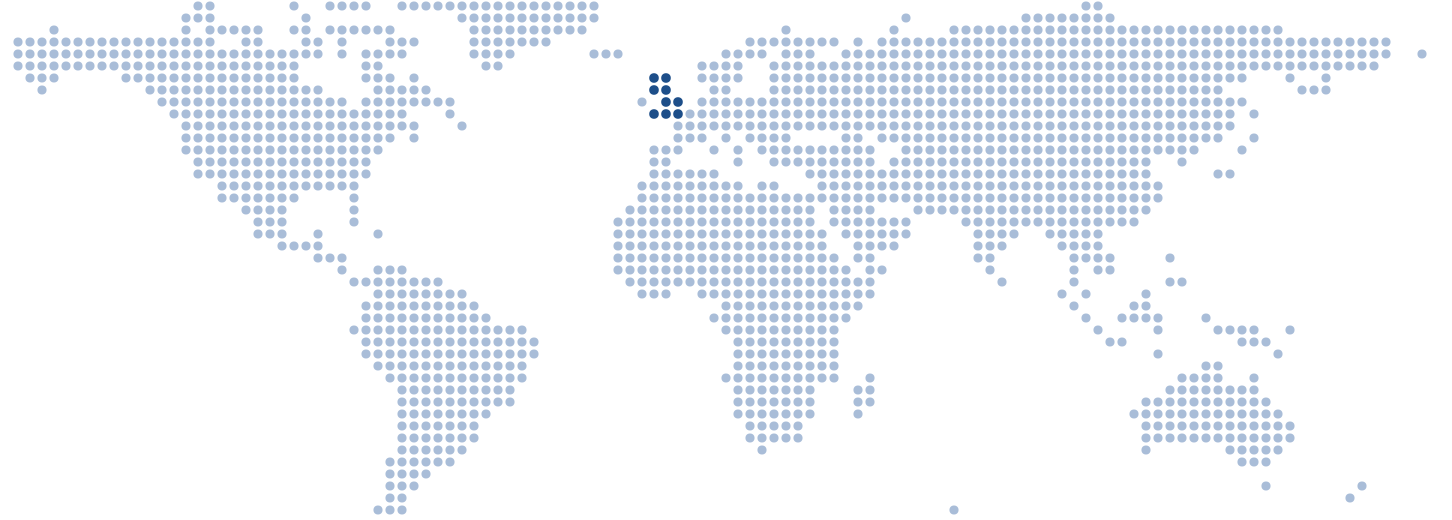
- Same cohort & protocol
- Across-ancestry
 External validation
US, multi-ancestry
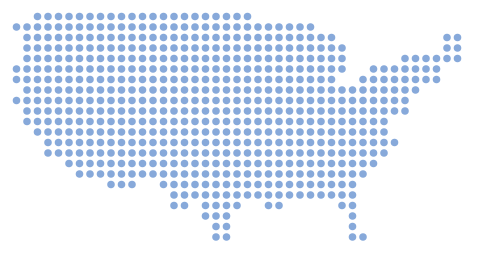
- Independent US cohort
- All-cause mortality
Replications across ancestries and an independent U.S. study test the generalizability of findings.
Exposome-wide association study
ExWAS · discovery & validation
ExWAS of diseases and mortality
An ExWAS mapping 720 external factors and 4,059 biomarkers in relation to incident disease and mortality risk among European-ancestry participants, with findings replicated in non-European participants and an independent NHANES study.
Explore · ExWASExposome-wide association studyGenetic support
Mendelian randomization · colocalization
Mendelian Randomization
Colocalization
Significant associations identified in ExWAS were further validated by two-sample Mendelian randomization and colocalization analyses. GWAS summary statistics were derived for external factors and biomarkers from UK Biobank, and for diseases from FinnGen.
Explore · Genetic supportMendelian randomization & colocalizationTrajectories
Pre-diagnostic temporal dynamics
Temporal changes of exposome
External exposures
Biological markers
Nested case-control design was adopted to construct temporal trajectories of external factors and biomarkers. In each time interval, associations for external factors were expressed as ORs, and biomarkers differences were expressed as Z-scores.
Explore · TrajectoryTrajectories of external exposome and biomarkersMediation
External exposure – biomarker – disease
Mediation analysis
Structural equation modelling was used to evaluate mediation effects of biomarkers for the associations between external exposome and diseases. External factors and biomarkers measured at baseline were considered.
Explore · MediationMediation effects of biological markersModifiable exposure contribution & genetic interaction
ERS | PRS | PAF
PAFs of modifiable exposures
- Diet
- Physical activity
- Sleep & others
- Smoking & alcohol
- Natural/occupational environment
- Socioeconomic factors
GxE interaction
Six categories of modifiable external factors were profiled, and ERS for each category were derived using multi-exposure models. Corresponding PAFs were estimated to quantify the contribution of modifiable exposures to each disease.
Explore · Modifiable exposuresPopulation burden attributable to modifiable exposuresGenetic modification of modifiable exposure effect was evaluated using interaction terms between ERS and PRS. The population burden of disease was decomposed into contributions from the external exposome, biomarkers, and genetic susceptibility.
Explore · Genetic interactionGenetic interaction for exposome contributionClinical application
Risk prediction · exposure–response
Disease classification & Risk prediction
Machine learning pipeline
Disease Prediction
Exposure-response curve
Hazard ratio
LightGBM models to predict disease and mortality risk using external exposome and biological markers.
Explore · PredictionRisk prediction and stratificationRestricted cubic spline models to identify potential thresholds and exposure ranges associated with the lowest observed disease risk.
Explore · Exposure responseExposure–response relationshipsBuilt on two population cohorts
409,206 discovery + 92,730 internal-validation participants, profiled for external exposures & biomarkers.
External validation — 59,064 US, multi-ancestry participants.
Explore the associations
Query every exposure–disease link interactively, filter by system, and trace the evidence from association to causal support.
Open ExWAS